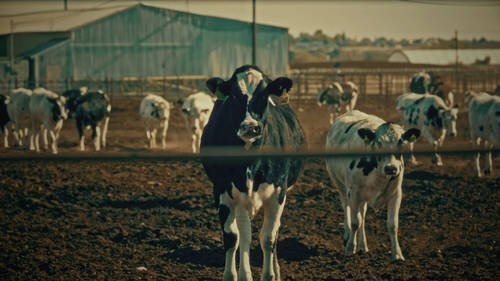
A new documentary by a local nonprofit group about the health impacts from farms and dairies in the Lower Yakima Valley is nearing release, but has already drawn criticism from a farming group.
Empowering Latina Leadership and Action's documentary, "Price of Plenty," has had three public screenings, in Sunnyside and Seattle. A final version, about an hour and 18 minutes long, will be released on ELLA's website soon, said Maria Fernandez, director of ELLA.
The subject is close to Fernandez's heart. Her father was a farmworker who passed away from cancer at 45. She said no one else in his family had cancer. She believes exposure to pesticides was to blame.
"If you care about the water you drink, the air you breathe, you should be concerned," Fernandez said.
The documentary interviews farmworkers and residents about the health effects of pesticide exposure, nitrate pollution in groundwater, and air pollution from industrial-scale agriculture. It also features interviews with environmental lawyer Charlie Tebbutt and Dr. Catherine Karr from the University of Washington.
One man described the pain of suffering from chemical burns he received on the job while working in an orchard. A woman described not being able to drink the water in her family's home because of nitrates.
The focus on the negative side of the Yakima Valley's main economic driver has ruffled some feathers.
Save Family Farming, a farming advocacy group, has been outspoken against the documentary's message and the fact that a state grant, administered through the state Department of Health, was used to produce it.
It objected to the use of the Department of Health's logo used on ELLA's social media videos, which it says gives the appearance of endorsement of an "anti-farming" message and authority from the state.
Fernandez said that they removed the logos when asked to do so, following Save Family Farming's complaints. The DOH logo is still visible on some ELLA social media videos.
Dillon Honcoop, Save Family Farming spokesperson, said the documentary paints the picture that farms and dairies in the Lower Valley are "evil and poisoning people."
That was not the intent, according to Fernandez.
"People think we're anti-farming, anti-dairy. It's not true," Fernandez said. Instead, she said she wants accountability from the industry for its effects on the land and workers.
Department of Health grant
The money for the documentary came from a $500,000 grant from the Healthy Environment for All (HEAL) Act.
The HEAL Act was passed in 2021, and requires the state departments of Ecology, Agriculture, Commerce, Health, Natural Resources and Transportation, and the Puget Sound Partnership "to identify and address environmental health disparities in overburdened communities and for vulnerable populations." It was enacted at the same time as the Climate Commitment Act.
In an email, Department of Health spokesperson John Doyle said that ELLA's grant application was selected through a competitive process by a community advisory board. The department received Climate Commitment Act funding to create and manage its HEAL Community Capacity grant program in the 2023-25 state budget.
A portion of the grant supported "community storytelling through media, documenting environmental justice from the community's perspective."
"Respecting the autonomy of our partners, DOH did not provide editorial oversight and did not sponsor or produce any specific content of the videos created under this grant," Doyle said. "While they are an important part of the dialogue on environmental justice and health impacts, the perspectives shared are those of individual participants and do not represent official positions or views of DOH."
ELLA received its grant in 2024 and began filming in 2025, Fernandez said.
Fernandez said that only a fraction of its grant went toward the filming of the documentary and the majority went to events and hiring new staff, as well as offering a stipend to new volunteers in its environmental justice advocacy program.
Honcoop said it was not right for the state to provide money to a nonprofit that he said has a clear political agenda.
"We're an advocacy group, they're an advocacy group," Honcoop said. "I would not feel good about tax dollars going to my own group."
Fernandez said that the purpose of the HEAL Act was to support environmental justice in overburdened communities like the Yakima Valley, and to that end, ELLA is a good partner with the program.
"The crux of it is, we're fighting for clean water and clean air."
Between 2023 and 2025, about $20 million in HEAL Community Capacity grants had been allocated to 41 projects in the state, according to an Office of Finance Management dashboard online. Nearby, the Yakama Nation received grant money for a first foods program and Semillero de Ideas, a nonprofit for farmworkers with a focus on innovation, received money for community engagement.
Editor's note: This story was updated to include information about the DOH logo on ELLA social media videos.
