In many Latino households, we are raised with a simple rule: respect authority. Don’t question elders. Don’t challenge leaders. Don’t make waves.
But what happens when silence protects systems that harm our community?
At ELLA and ELLA Adelante, we believe something different: questioning power is not disrespect. It is responsibility.
During a recent podcast conversation about our Emerging Leaders program, Maria Fernandez named something many people feel but rarely say out loud. “There should be no sacred cows in our community,” she said. “Everybody should be questioned.”
That statement is not about hostility. It is about accountability.
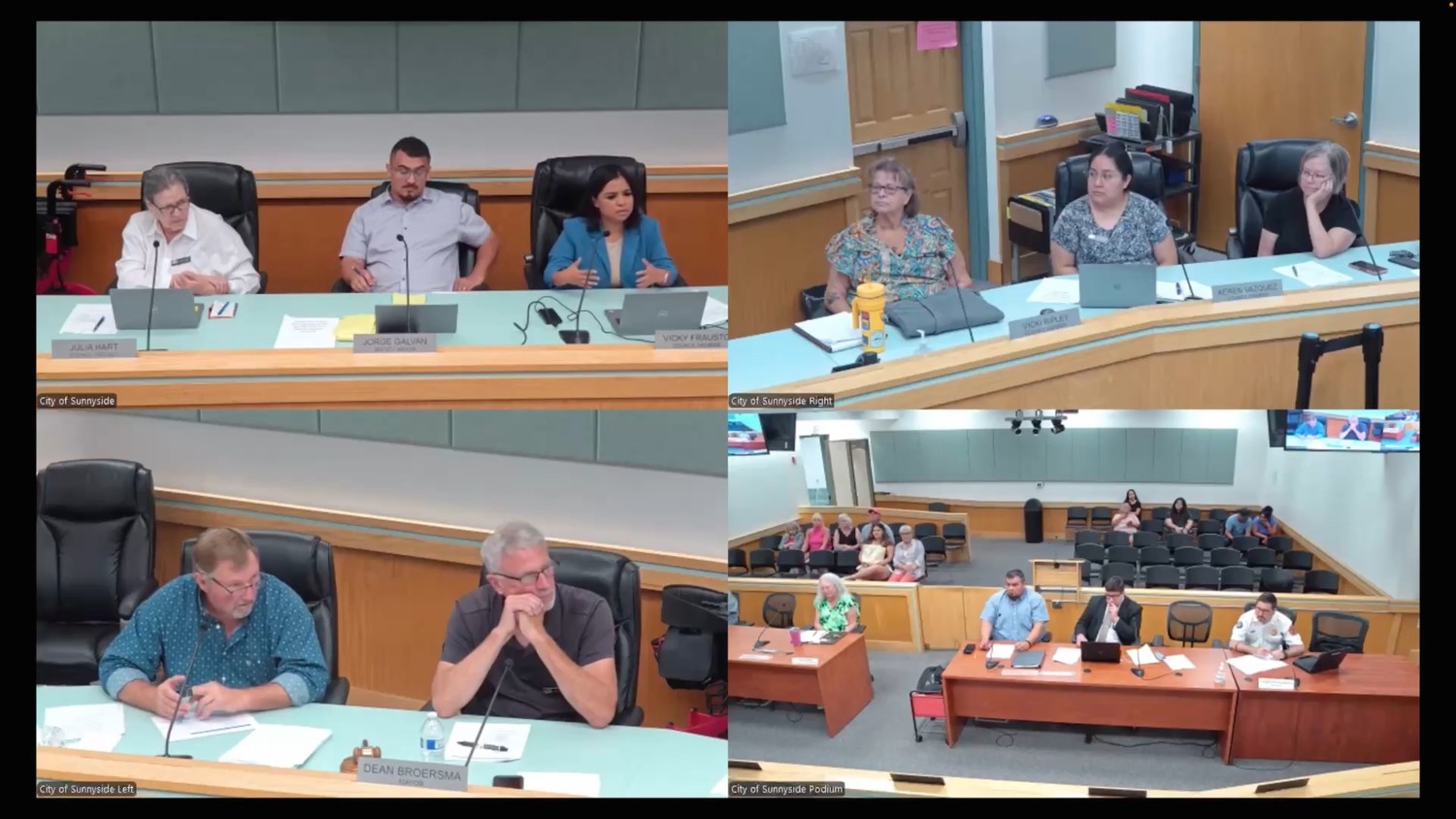
For too long, local leadership in Sunnyside has operated without meaningful challenge. Decisions have been made that impact housing, youth programming, infrastructure, economic development, and public safety — often without transparent dialogue about who benefits and who bears the cost.
When community members question those decisions, they are sometimes told they are being divisive.
But democracy requires scrutiny.
Consider what happens when elected officials publicly question whether equity should even be part of governance. When someone in power asks, “Why does equity matter?” it reveals a deeper issue: a failure to recognize that not all residents have had equal access to opportunity.
Equity is not a slogan. It is the acknowledgment that communities of color — particularly farmworking, Spanish-speaking families — have historically faced barriers in education, housing, healthcare, and political access.
ELLA’s Emerging Leaders program was built around this principle: governance must be viewed through the lens of those most impacted by policy. That means training leaders to ask hard questions.
Who benefits from this ordinance?
Who is left out?
Does this policy punish or uplift?
Are we investing in youth programs — or cutting them?
Are we diversifying our economy — or doubling down on industries that leave families hurting?
Questioning is not negativity. It is care.
ELLA and ELLA Adelante are not above accountability either. As Maria said in the podcast, “We are not above being held accountable. When our community calls us to task, we will course correct.”
That is what ethical leadership looks like.
The goal of Emerging Leaders is not to create politicians who blend into the system. It is to cultivate critical thinkers — leaders willing to risk comfort, risk popularity, even risk friendships if necessary, to defend what is right.
Because representation without courage is hollow.
And questioning without love is destructive.
But when questioning is rooted in love for community — for our children, for our farmworking families, for elders who built this town — it becomes a powerful act of protection.
Participatory democracy requires participation. It requires vigilance. It requires courage.
And sometimes, it requires us to say:
This can be better.
This must be better.
And we are willing to do the work to make it so.
If you want to learn how you can help keep public leaders accountable, or are just curious to learn more, reach out to ELLA today and we can help.
Posted April 08, 2026
We use cookies to improve your experience on our website. By browsing this website, you agree to our Privacy Policy.
x